Get free quotes from dental IT support near you
Takes about a minute. Free, no obligation; providers reply to you directly.
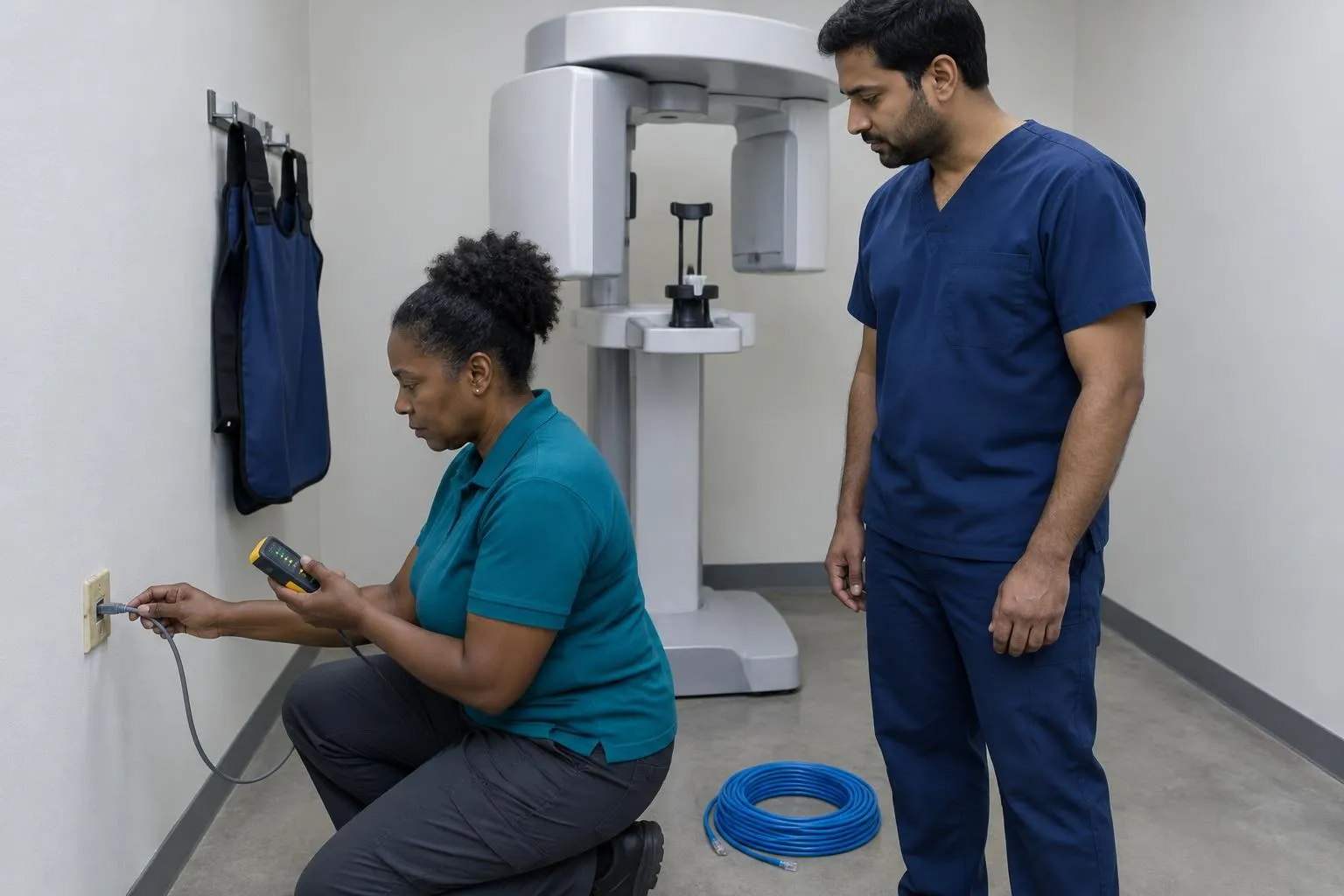
A dental IT support told me once that the biggest waste of money they saw was a practice that spent $80,000 upgrading to the latest 3D CBCT scanner — then called them two weeks later because their 12-year-old network couldn’t push the DICOM files fast enough to view them. The scanner sat idle for a month while they waited on new cabling.
That story is more common than vendors want you to know.
The Short Version:The equipment that actually matters in dental IT support is your network infrastructure, your server or cloud storage, and your practice management software integration — not the flashiest imaging hardware. Expensive gear breaks down without solid IT foundations underneath it.
Key Takeaways
- Digital imaging hardware (panoramic X-rays, intraoral sensors, CBCT) is only as good as the network and storage supporting it
- HIPAA compliance isn’t optional equipment — it’s a baseline requirement for every system in your practice
- Seven major dental software platforms (Dentrix, Dexis, OpenDental, Dolphin, Vixwin, Orthotrac, Invivo) require specialized IT knowledge — generic MSPs often don’t have it
- The highest-ROI IT investment for most practices is a managed services agreement, not a hardware upgrade
The Marketing Story vs. The Real Story
The dental technology industry is very good at one thing: making you feel like your current equipment is the problem.
New intraoral camera? Your patients will trust you more. Updated 3D CBCT? Your diagnosis quality will leap forward. Cloud-based everything? You’ll save hours a week.
Some of that is true. Most of it is incomplete. Here’s what the sales pitch leaves out: none of that hardware works reliably without a competent IT layer underneath it. And most dental practices — including well-run ones — have IT infrastructure that ranges from “neglected” to “actively dangerous.”
The real villain isn’t outdated equipment. It’s the gap between what your technology promises and what your network, security posture, and software integration can actually deliver.
What Actually Matters: The Non-Glamorous Foundation
Network Infrastructure First, Hardware Second
Panoramic X-ray machines, intraoral sensors, and 3D CBCT units all generate large DICOM image files. A single cone-beam CT scan can run 200–500MB. If your in-office network can’t move those files reliably — or your server is undersized — the most advanced imaging hardware becomes a waiting room complaint generator.
What matters here:
- Gigabit ethernet at every operatory (not just the front desk)
- A dedicated VLAN for imaging devices, separated from guest Wi-Fi and administrative traffic
- A NAS or server sized for your imaging volume, or a HIPAA-compliant cloud storage tier with enough bandwidth to matter
Reality Check:“Cloud integration” is a real capability, not just a buzzword — but only if your internet uplink can handle it. A 50 Mbps business connection uploading multi-hundred-megabyte DICOM files during patient hours will create bottlenecks that no amount of cloud storage fixes.
Software Integration Is Where Practices Actually Lose Time
The five core IT solutions identified for dental practice growth in 2025 include modern IT infrastructure, digital imaging, and practice management software — but integration between them is where practices bleed hours.
The seven major platforms in common use — Dentrix, Dexis, Dolphin Management & Imaging, OpenDental, Vixwin, Orthotrac, and Invivo — each have their own quirks, database structures, and update cycles. A provider who supports all seven isn’t rare because it’s hard to find vendors; it’s rare because genuine platform expertise takes years to build.
When your intraoral sensor software doesn’t talk cleanly to your PMS, someone is doing manual data entry. Every day. That’s the real cost of poor integration.
Pro Tip:Before signing any managed services agreement, ask your provider to list which dental software platforms they actively support, not just “have experience with.” There’s a meaningful difference.
The Equipment Comparison: What’s Load-Bearing vs. What’s Marketing
| Equipment / System | Actual Impact on Practice Operations | Marketing Hype Level |
|---|---|---|
| Gigabit network switches + structured cabling | High — directly affects imaging speed and workflow | Low (boring, not photogenic) |
| HIPAA-compliant server or cloud storage | High — compliance and data loss risk | Medium |
| Practice management software (Dentrix, OpenDental) | High — touches every patient interaction | Low (already a known cost) |
| 3D CBCT / Panoramic X-ray hardware | Medium — real clinical value, but needs IT foundation | High |
| Intraoral cameras | Medium — case acceptance tool with real value | High |
| Managed endpoint security (EDR, encryption) | High — ransomware targeting healthcare is up significantly | Low (invisible until it matters) |
| Cybersecurity “compliance dashboards” | Low–Medium — useful for audits, not a substitute for actual security | Very High |
Nobody sells “better cabling.” But that’s usually what the practice actually needs.
The HIPAA Layer: Not Optional, Not a Product
Here’s what most people miss: HIPAA compliance isn’t something you buy. It’s something you implement and maintain, across every system that touches patient data.
That means:
- Encryption at rest and in transit for all imaging software and PMS data
- Annual risk assessments (not one-time checkbox audits)
- Business Associate Agreements with every vendor who touches PHI
- Access controls and audit logs — especially on shared workstations
Credentialed dental IT providers — those with CompTIA Security+, CHIT (Certified Healthcare IT), or CHP certifications — understand that a panoramic X-ray machine connected to an unencrypted network isn’t just a technical problem. It’s a reportable breach waiting to happen.
Expensive imaging gear with a lax security posture is a liability, not an asset.
Reality Check:A specialized dental IT provider doesn’t just set up your systems — they take ongoing responsibility for HIPAA compliance across your entire tech stack. General-purpose MSPs rarely offer this. The distinction matters.
When the Gear Actually Does Matter
This isn’t anti-technology. Modern digital imaging — intraoral sensors, 3D CBCT, digital panoramic X-rays — provides genuine clinical value and patient communication benefits that weren’t possible 15 years ago. The best dental IT providers (like those covering Dallas/Fort Worth orthodontic and dental practices) explicitly support this hardware because it’s central to how modern practices run.
The point isn’t “don’t buy good equipment.” The point is: sequence matters.
Get the network right. Get the storage right. Get your PMS integrated and secured. Then the imaging hardware performs the way the brochure promised.
Practical Bottom Line
Before your next hardware purchase, audit these five things:
- Network speed at the operatory level — not just at the router
- Your current HIPAA risk assessment date — if it’s more than 12 months old, you’re overdue
- Whether your IT provider can name your specific PMS platform — and prove they’ve migrated or supported it before
- Storage capacity for your imaging volume — and whether cloud or on-premises fits your internet connection
- Your last time you tested data backup restoration — not just “backups are running”
For a fuller picture of how dental IT support works end-to-end, the Complete Guide to Dental IT Support covers the full scope of what managed services agreements include and what to look for when hiring a provider.
The technology industry is excellent at selling you confidence. A good dental IT provider sells you something harder to photograph: reliability.
Done reading? Get quotes from dental IT supports near you.
Takes about a minute. Free, no obligation; providers reply to you directly.
Popular cities:
Nick built this directory to help dental practice owners find credentialed IT providers without wading through general IT shops that lack dental software expertise — a gap he encountered when researching technology vendors for healthcare clients who needed both HIPAA compliance and Dentrix familiarity from day one.